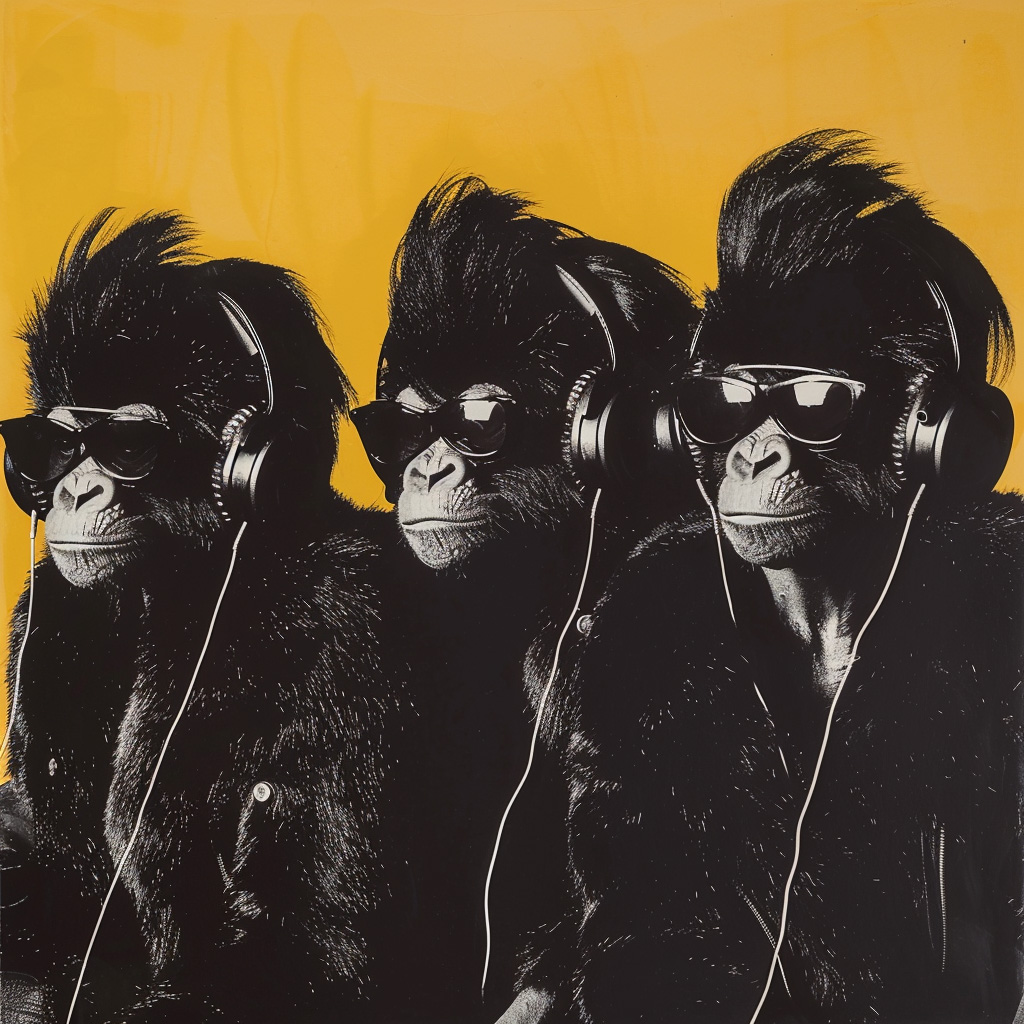
DMT Encounters and the Mystery of Other Minds
A chamber opens where there should be darkness. Strange machinery turns, and beings appear to continue tasks begun long before the visitor arrived. Some approach with apparent delight; others scarcely interrupt their work. The astonishing impression is that this place was already occupied.
Such scenes recur in published DMT accounts collected by Andrew R. Gallimore in Death by Astonishment. They describe futuristic environments, workshops, and unfamiliar landscapes inhabited by presences that seem purposeful and independent. These are reports of experience, not verified journeys, but their inhabitants deserve closer attention. What do people actually meet?
Strange Creatures, Stranger Worlds
The creatures resist familiar categories. A 2021 field study by Pascal Michael, David Luke, and Oliver Robinson records insectlike forms, including a moth-shaped presence constructed from geometric outlines. Other accounts describe elongated heads, oversized eyes, extended limbs, and features combining octopuslike and serpentine qualities. There are mechanical clowns and jesters, figures that continuously transform, and geometrical structures experienced as intelligent. A creature may seem to emerge from the surrounding patterns, making it difficult to decide where its body ends and its environment begins.
The terrain is equally extraordinary. Participants describe gardens with rivers, richly patterned palatial surroundings, immense changing structures, and spaces threaded with intricate lattices. Elsewhere, the scene resembles the interior of a vast mechanism, with moving tracks and layered machinery. One account compares the shifting environment to a three-dimensional book unfolding around the observer. Here, landscape is experienced as an event: space seems to assemble, transform, and disclose further possibilities.
What happens within these environments can be more unsettling than their appearance. Gallimore recounts a report of insectlike intelligences observing a visitor in a waiting-room setting. Another describes a reassuring female presence apparently demonstrating a communication device the experiencer could not understand. Elsewhere, small beings seem absorbed in construction. The emotional force comes from encountering apparent intentions: someone is watching, showing, working, or attempting to communicate.
When Visions Feel Like Encounters
That sense of intention changes everything. A beautiful vision can remain a spectacle. A presence that appears to answer us introduces relationship. The observer begins wondering whether the experience has another center of awareness, one with its own interests and its own interpretation of the meeting. Perhaps the visitor is as unfamiliar to the creature as the creature is to the visitor. That possibility gives the encounter its peculiar mixture of intimacy and estrangement.
The relationship between creature, environment, and consciousness is central to Traces of the Other, Gallimore’s 2026 research preprint with Niffe Hermansson and Donald D. Hoffman. Their proposed framework treats perception as an interface. An encountered form would not necessarily reveal another intelligence as itself; it might represent that intelligence’s influence on the observer’s experience. They hypothesize that DMT could make normally inaccessible influences perceptible. This is a hypothesis for investigation, not an established identification of the beings.
Applied imaginatively, this raises a fascinating possibility: perhaps the insect, the shifting geometry, and the surrounding architecture cannot always be understood separately. Could a perceived environment function as part of a communication? Could changes in form express relationships for which ordinary language has no vocabulary? These are questions the framework inspires. They invite us to consider whether the apparent strangeness belongs entirely to the encountered presence, or partly to the mind attempting to comprehend it.

What Are the Beings Teaching Us?
And what are these presences reportedly teaching?
In a survey of 2,561 people describing DMT-associated entity encounters, Alan Davis and colleagues found recurring reports of messages concerning personal behavior, love, reassurance, interconnectedness, and death. Some respondents interpreted encounters as encouragement to change destructive habits or reconsider relationships. Others reported peculiar, ambiguous, or commanding messages. The accounts do not reveal a single doctrine delivered by a uniform population of wise teachers. They reveal encounters interpreted in markedly different ways.
Their consequences can nevertheless be profound. Many survey respondents attributed lasting improvements in meaning, purpose, and relationships to their experiences; fear was also common during the encounters. Because this was a self-selected survey, it cannot predict an individual’s outcome or verify the messages. What it demonstrates is that an apparently brief meeting can acquire enduring personal importance.
Perhaps the most useful lesson to examine is what happens after the spectacle ends. Does the experiencer become more compassionate, more attentive, more capable of questioning assumptions? Or does fascination replace judgment?
Whatever their source, extraordinary impressions require interpretation. A presence experienced as powerful need not be infallible. The meaningful transformation would be an expanded capacity to understand and live responsibly, rather than certainty acquired through astonishment alone.